

The Deco Files: Letterpress
When the decoration is something you can actually feel with your fingertips
Welcome to The Deco Files. We are breaking down some of our favorite decoration methods so you know exactly what you are looking at, what it takes to pull it off, and when it is the right fit.

Last time we were in paper territory we covered Paper Printing, which is offset digital ink going straight onto stock for crisp, clean, full-color results, and that’s great for labels and inserts and collateral that needs to look polished, but letterpress is a completely different conversation because the whole point isn’t just putting ink on paper, it’s pressing it in. And we love love a letterpress.
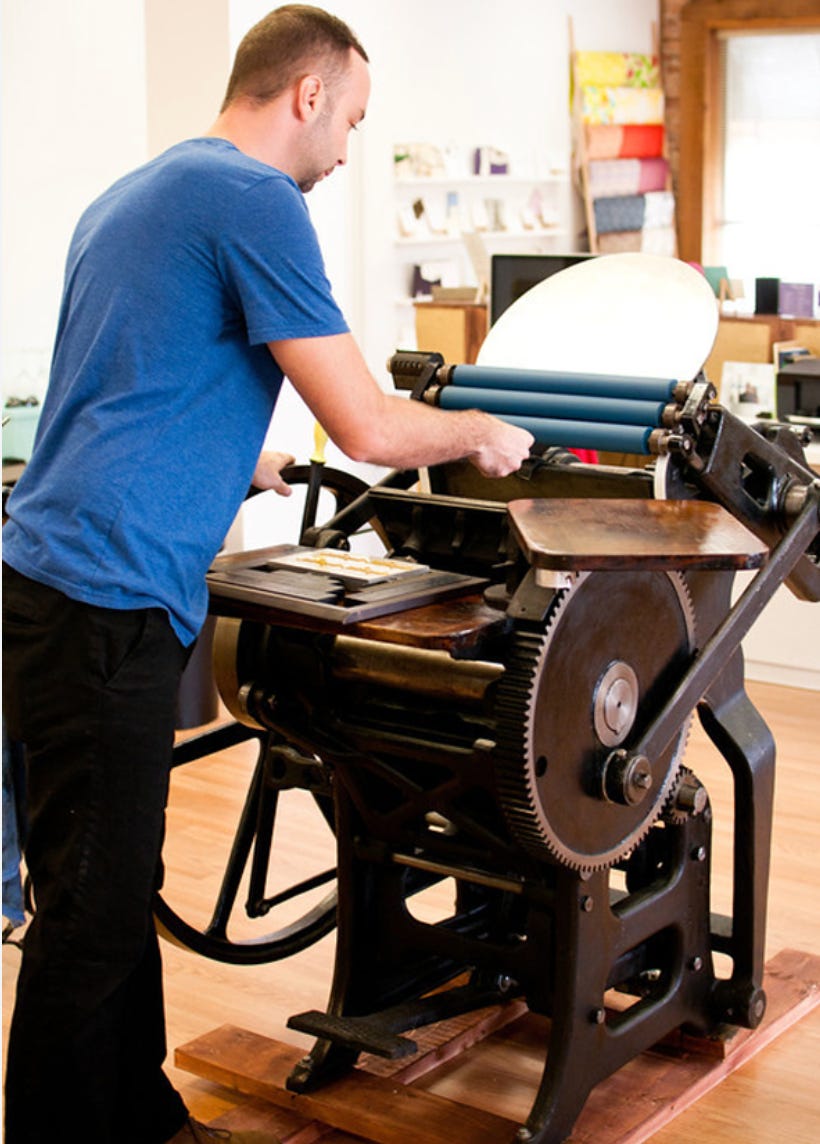
Most printing sits on top of the paper and calls it a day, but letterpress has a different philosophy entirely, because the whole point is that an inked plate gets pressed directly into the paper stock with enough force to leave a physical impression in the surface, and you end up with something that’s raised and recessed and tactile and beautiful all at once. It’s one of those processes that predates just about everything else in this industry, and it has somehow managed to stay extremely relevant because the result is genuinely hard to replicate any other way.
If you’ve ever run your fingers across a really nice letterpress piece and felt that slight indent where the text used to be, you already know why people keep coming back to it.
Be sure to check out our decoration methods page for more info on paper printing items and more.
So what does a letterpress do?
A raised plate is made from the artwork, inked up, and then pressed directly into the paper stock under significant pressure, which pushes the ink into the fibers and leaves that characteristic impression behind. The paper takes on the shape of the plate, so the finished piece has a slightly debossed quality in the areas where the plate made contact, and the ink sits right there in that impression with a richness and density that flat digital printing just doesn’t produce.
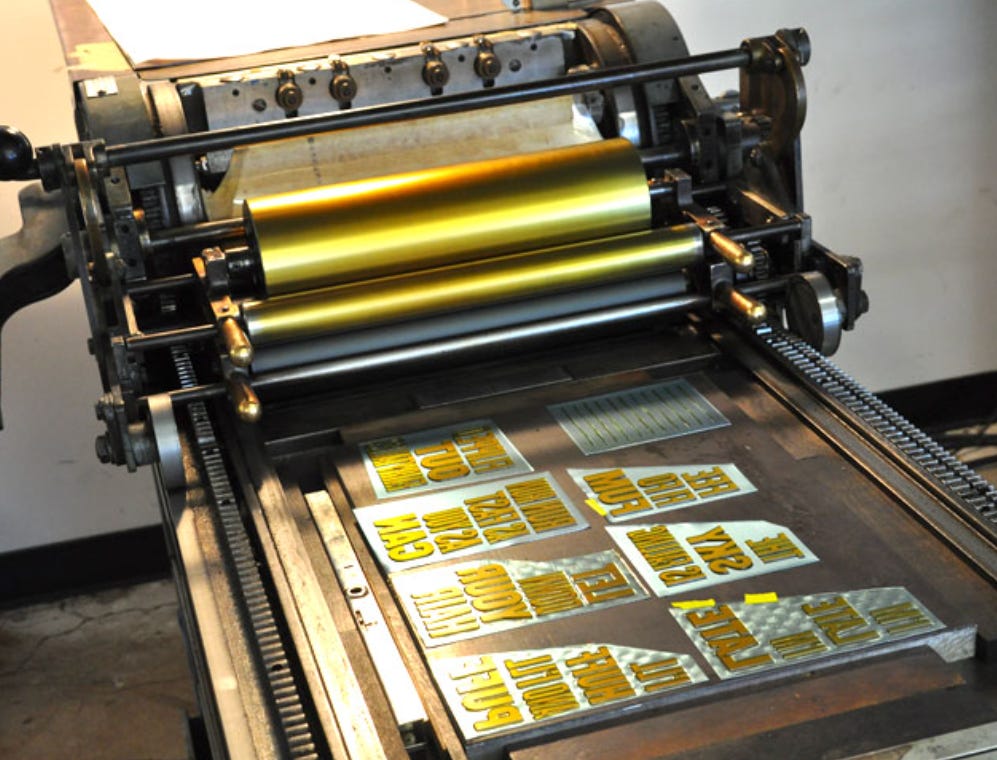
The result is slightly imperfect in a way that reads as intentional and premium rather than sloppy, because the variation and texture that come from the process are part of what makes the piece feel like it was made rather than just printed, and there’s a tactile quality to letterpress work that stops people in their tracks when they pick it up.
Why we love it
Premium paper goods + texture + rich, tactile finish = Letterpress.
Letterpress is doing something very specific that no other print method can fully replicate, which is that it makes the paper itself part of the decoration. The impression is in the substrate, not just sitting on top of it, so the decoration and the product are literally the same thing, and that’s a hard story to tell with any other process. It reads expensive and handcrafted even when it’s produced at scale, and for clients who want their branded paper goods to feel like something worth keeping, letterpress is a very compelling answer.
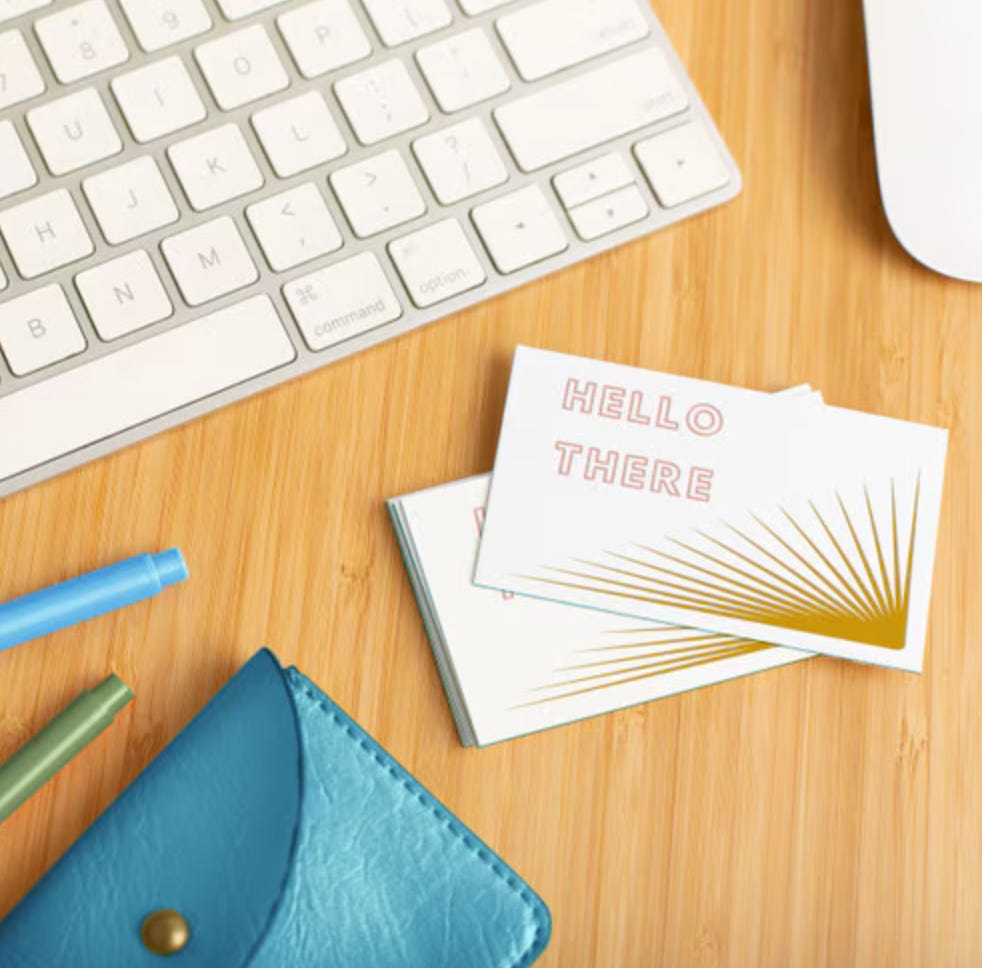
It also photographs extremely well, which is always a nice bonus when a client is going to put the piece in front of a camera.
What to know going in
→ Artwork for letterpress should lean clean and confident, because the process rewards bold lines, solid type, and graphic shapes, and tends to lose some of the charm with very fine detail or complex gradients. A simple, well-designed mark is going to come through with a lot of character, while artwork that depends on tiny details or photographic elements is usually a better fit for a different process.
→ The paper stock matters here too, because letterpress is at its best on thick, quality stock that can take an impression cleanly and hold the texture over time. Thin or lightweight papers don’t give the plate enough to work with, and part of what makes a letterpress piece feel premium is that the paper stock itself is doing some heavy lifting alongside the print.
Watch our team create letterpress cards on our own vintage machines in “reel” time! ⤵️
And because this is an impression-based process, every piece is going to have a little bit of character and variation to it, which is honestly most of the appeal, but it’s worth setting expectations with clients who are expecting the kind of pixel-perfect uniformity you’d get from digital printing.
The products that are built for this
Letterpress is the move on premium paper goods where the texture and tactile quality of the finished piece are part of the pitch, and the paper catalog is where it lives.
Cards are the home base for letterpress, because a well-made card with a deep impression and rich ink is the kind of thing someone actually holds onto rather than tosses in a drawer and forgets about, and for clients who want their brand to make a first impression that people can literally feel, letterpress on a quality card stock is a very hard thing to argue with.


Let’s recap
Letterpress is for clients who want something that feels considered and made with care, and for moments where the paper good itself is supposed to communicate something about how seriously the brand takes its presentation. It’s warm, it’s rich, it’s tactile, and it has a quality that synthetic processes have been trying to replicate for decades without quite getting there.
So if a client is asking for premium paper goods and they want something that stands out from the stack of flat-printed cards everyone else is handing out, letterpress is our answer.