

The Deco Files: Debossing
When the brand mark is something you feel before you see
Welcome to The Deco Files. We are breaking down some of our favorite decoration methods so you know exactly what you are looking at, what it takes to pull it off, and when it is the right fit.

We’ve spent the Deco Files talking a lot about ink and thread, whether it’s sitting on top of a material, soaking into the fibers, getting cured on a hard surface, or stitched right into the fabric, so let’s flip the whole conversation on its head, because Debossing doesn’t add anything to the product at all. There’s no ink, no thread, no transfer, no cure, just pressure and a precisely made die pressing your design into the material until it leaves a recessed impression behind, and that impression is the decoration.
It’s branding you feel as much as you see, and on the right product, that subtlety is doing more work than a big loud print ever could.
Be sure to check out our decoration methods page for more info on Debossing items and more.
So what is Debossing?
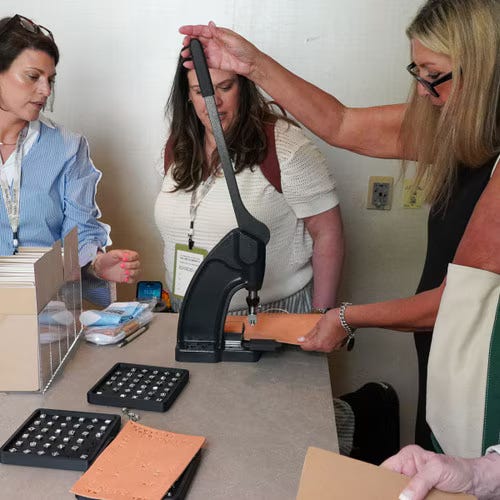
It’s pretty simple: a custom die is made from the artwork, the product gets positioned underneath it, and the press comes down with enough force to push that shape cleanly into the surface of the material. The fibers compress and reshape into the impression of the die, and when the pressure lifts, the design stays right where it was pressed, recessed into the material rather than printed onto it. Nothing gets added, nothing gets layered on top, the surface of the product itself becomes the surface that carries the brand.
The result is a clean, minimal, very intentional mark that catches light differently than the rest of the material and reads as premium without ever having to announce itself, which is exactly the appeal.
What it’s genuinely great at
Leather + subtle, premium branding + recessed, tactile finish = Debossing.
Debossing’s whole thing is restraint. It’s the decoration method for clients who want the logo to be present but not pushy, and for products where the material itself is doing a lot of the talking and the branding just needs to land softly on top of it. The finish ages beautifully because there’s nothing on the surface that can crack, peel, fade, or wear off, and the impression itself is part of the material now, so a debossed mark on a leather pouch on day one is going to look the same on year three, just with the leather around it getting a little richer over time.


It’s also the move when a client cares about how the product feels in hand, because debossing adds a physical detail to the surface that you actually run your fingers over, and that little tactile moment is a big part of why debossed pieces read as premium even before anyone gets a good look at the logo.
What to know going in
A few things worth keeping in your back pocket when you’re scoping a debossed project.
The material matters a lot here, because debossing relies on pressure reshaping the surface, and not every material wants to take and hold an impression cleanly. Leather is the obvious favorite because it presses beautifully and keeps that crisp edge, while other materials either bounce back or don’t hold the detail the way you’d want. That’s why this process lives mostly on the leather side of the catalog rather than getting offered on everything.
Artwork should lean clean and confident, because debossing translates shapes and bold linework really well and gets a little less friendly with very fine detail, super thin strokes, or intricate gradients. A logo or wordmark that’s been simplified for a debossed application is going to look sharp and intentional, where artwork that depends on tiny details or photographic elements is usually a better fit for one of the printed processes.
And because there’s no ink involved, you’re not picking colors, you’re picking depth and clarity. The mark is the same color as the material around it, just recessed, so the contrast comes from light and shadow rather than from pigment, which is part of why debossing reads as subtle and premium rather than loud and flashy.
Take a peek at a quick video on how we Deboss in house from our marbled leather substack —> Deboss is the boss
The products that are built for this
Debossing is the move on items where a subtle, premium, tactile finish is what the client is actually after, and the leather side of our catalog is where it really lives.
Leather Goods are the home base for debossing, because leather is genuinely the material this process was made for. It takes the impression cleanly, holds the detail beautifully, and ages into the kind of piece somebody actually wants to keep using, with a debossed logo that gets a little more character every year rather than less.


So, to recap…
Debossing is clean, it’s minimal, it’s tactile, and it carries a quiet sense of quality that’s hard to fake with any other decoration method, because the mark is part of the material now and there’s no surface layer that can give the game away.
So if a client is reaching for that elevated, understated, very intentional look on a leather piece, debossing is a great answer.